This document is only available in French.
Mémoire de la CÉCC au sujet de résolution d’amendement concernant l’article 17 de la Constitution (This document is only available in French)
Leave a reply

This document is only available in French.
Vatican City (CCCB) — Reverend Father Émilius Goulet, P.S.S., French- language General Secretary of the Canadian Conference of Catholic Bishops, in an intervention at the Synod of Bishops’ Special Assembly for America, said “in order to implement the ‘new evangelization,’ we must form and develop impassioned apostolic priests to proclaim the Gospel.” Father Goulet said that priests are needed “with a deep desire not only to be pastors of the Church, but missionaries of the living Christ, eager to go out into the world where so many men and women are searching for meaning and freedom.”
Father Goulet, speaking in his own name at the Synod, was responding to No. 25 of the Instrumentum Laboris, dealing with priestly vocations and the formation of clergy. He said the continuing decrease in the number of priests “profoundly affects both the ministry and the image of the priest. Many priests believe that being responsible for more than one parish has meant a significant loss in their relationship with their people.” “They also find,” Father Goulet continued “that serving more than one parish diminishes the significance of the Eucharist, which is to be the source and summit of Christian life.”
Father Goulet proposed three lines of action to improve the current situation: Review and harmonize the responsibilities of priests, lay pastoral workers and those exercising new ministries so as to avoid reducing the role of the presbyterial ministry to only celebrating the sacraments; help priests live a balanced life by encouraging spiritual resourcing, proper rest and a fraternal sense of community; encourage vocations to the presbyterate by challenging young adults to consider being priests, especially through the witness and enthusiasm of priests in exercising their mission.
Father Goulet, a former provincial of the Sulpician priests of Montreal, did say one positive impact of the current reduction of priests was that a large number of the laity, men and women, were becoming more aware of their responsibilities in the Church.
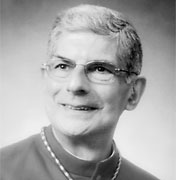 Vatican City (CCCB) — Bishop Anthony F. Tonnos of Hamilton, in an intervention at the Synod of Bishops’ Special Assembly for America, said the Canadian experience of ecumenism has been a positive one, marked by openness, cooperation and honesty. Describing the call to seek unity “as an imperative for all Christians,” he outlined for the Synod delegates three related elements for promoting ecumenism: spiritual means, practical cooperation and theological dialogue.
Bishop Tonnos, who is also president of the Ontario Conference of Catholic Bishops, was intervening at the Synod on Nos. 42-44 of the Instrumentum Laboris dealing with ecumenism and the Catholic Church in the religious context of the American continent. As illustrations of the spiritual means, he explained how Christians in Canada participate in various forms of shared prayer, for example, during Lent, civic occasions and in times of tragedy. He also touched on bible studies, ecumenical prayer groups and clergy retreats that enrich the spiritual life of participants and promote Christian unity. In terms of practical cooperation, Bishop Tonnos outlined examples of collaboration in dealing with poverty, human rights, life issues, aboriginal rights, corporate responsibility and refugees.
Bishop Tonnos also indicated there was ongoing theological dialogue by means of formal and informal ecumenical discussions in small faith groups, as well as through the Canadian Council of Churches which provides opportunities for inter-Christian and interfaith discussions.
 Vatican City (CCCB) — Bishop James Matthew Wingle of Yarmouth, in an intervention at the Synod of Bishops’ Special Assembly for America, told delegates human life is suffering such violent assaults on our continent that “we risk becoming hardened by familiarity to the horrors of death.” “Those deaths,” he continued, “occur in the millions and we end up considering every death simply as an inevitable and a daily occurrence.” The Bishop said our response is “to recognize how every human person is of unique value, since each human life is uniquely created in the image of God. The Church speaks unceasingly of human dignity and the integrity of life.”
Bishop Wingle was intervening at the Synod on Nos. 28 and 66 of the Instrumentum Laboris dealing with aspects of society requiring conversion and solidarity and the promotion of the culture of life. “When we listen to the voices of our brothers and sisters who are suffering because of poverty, marginalization and other social ills,” he said “we are hearing the voice of Jesus asking, ‘Why do you seek to kill me?’ (John 7:19).” “Now is the time to show how the truth of the Gospel applies in every aspect of human life,” he continued. “Confronted by the contemporary challenges of science, technology, law, medicine and social policy, throngs of people are asking how best to respond in a way that is worthy of the human person.” “Every social evil that oppresses the poor and the weak must be denounced,” he insisted. “Too often our society falters in recognizing the integrity and dignity of human life, and insists instead on judging the values of the human person by false standards.”
Bishop Wingle then asked the Synod delegates to be in solidarity with everyone who struggles to defend both life and the quality of life. He cited the example of the Canadian bishops in establishing, with the Knights of Columbus, the Catholic Organization for Life and Family that concerns itself with the value and dignity of the human being from the moment of conception until death.
 Vatican City (CCCB) — Archbishop Peter Sutton, O.M.I., of Keewatin-Le Pas, in an intervention at the Synod of Bishops’ Special Assembly for America , discussed how the Catholic Church in Canada is radically re-examining its relationship with the Aboriginal Peoples.
Archbishop Sutton said this re-examination is due to a number of factors. This includes the recognition, he added, “that we did not bring the Gospel to them in all its purity.”
“Rather, our initial missionary endeavour, for all its dedication, goodness and grace, was also marked by a lack of full respect for their culture and traditions and even, at times, by positive weaknesses and sin inherent in our own selves,” he said.
The Archbishop of the northern diocese said there is also recognition that “our own way of life on the North American continent led to much suffering and deprivation for these peoples.” Later he explained that aboriginal peoples are among the poorest of the poor in Canada.
Archbishop Sutton, appointed by His Holiness Pope John Paul II as a member of the Synod, was responding in his own name to Nos. 13 and 14 of the Instrumentum Laboris dealing with the Gospel and indigenous cultures.
He said that there has also been recognition of the inherent richness and value within native religious, moral and cultural traditions; that all future interrelations must be marked by a greater mutuality in every area; and that dialogue with them must be a dialogue of action involving a partnership to alleviate current injustices.
Archbishop Sutton concluded by recommitting the Church to walk into the future with Canada’s aboriginal peoples “in a renewed and purified covenant.” He said in doing so, “we hope that together we will more fully encounter the living Jesus Christ.”
 Vatican City (CCCB) — Archbishop Michael Bzdel, C.Ss.R., of the Ukrainian Archeparchy of Winnipeg, told the Synod of Bishops’ Special Assembly for America that the Catholic Church in Canada finds itself in what he calls “a post- immigrant Catholicism.” “We were born and took root within various ethnic, immigrant communities,” he said. “In them we flourished and achieved a rare and powerful faith enculturation, normally being the community’s key institution – a type of virtual seminary.”
Archbishop Bzdel explained that “as Catholics leave their immigrant homes, many, though not all, are losing their religious roots and are unable to keep much personal faith alive.” He went on to say that a new evangelization is needed to take into account the post-immigrant, post-seminary situation.
The Metropolitan for the Ukrainian Catholic Church in Canada was intervening at the Synod for America on Nos. 12 and 15 of the Instrumentum Laboris, dealing with the Gospel and the cultures of immigrant peoples. Archbishop Bzdel said it will be necessary to focus on creating a faith that is based more on a personal encounter with the living Jesus Christ than on ethnic or social factors. The Archbishop concluded by saying the Church in Canada approaches this task with much hope, “given the powerful experience of the Catholicism of our youth.”
 Vatican City (CCCB) — Archbishop Henri Goudreault, O.M.I., of Grouard-McLennan , in an intervention at the Synod of Bishops’ Special Assembly for America, says “the race for profits in our world has put the human person at the service of the economy, when the economy should be at the service of people.”
“Governments are having to compete with one another,” he said, “in order to offer the financial giants ever greater advantages and guarantees.”
Archbishop Goudreault was intervening on behalf of the Canadian Conference of Catholic Bishops in response to No. 28 of the Instrumentum Laboris dealing with the economic sphere as an aspect of today’s society requiring conversion.
“The globalization of the economy by multinational corporations is now a reality,” he said. “Two hundred multinational corporations control more than a quarter of the world’s economy, and the Multilateral Agreement on Investment (MAI) currently being negotiated will give these corporations even greater freedom and power.”
Archbishop Goudreault said the price being paid for this involves heavy costs in employment, the environment, natural and human resources and culture.
In concluding his presentation, the Archbishop listed five possible actions that could be taken on this question:
Archbishop Goudreault indicated the forgiveness of debts is a complex question that demands expertise and will probably have to involve several different approaches.
 Vatican City (CCCB) — Archbishop Maurice Couture, R.S.V., of Québec, in an intervention at the Synod of Bishops’ Special Assembly for America, said the growing popularity of new religious movements reflects a spiritual quest involving “unfamiliar ways.”
Archbishop Couture, who is Primate of Canada, says “it is not uncommon for Catholics to adopt some of these more or less vague theories, unless they recognize specific elements incompatible with the Christian faith, for example, reincarnation.” The Quebec City Archbishop continued that the major challenge facing the Church with new religious movements is “directing the search for the spiritual toward a true encounter with the living Jesus Christ.”
Archbishop Couture was intervening at the Special Assembly on behalf of the Canadian Conference of Catholic Bishops in response to No. 45 of the Instrumentum Laboris dealing with new religious movements. “The renewed popularity of spirituality in Canada in large measure is inspired by the esoteric, New Age, eastern methods of meditation and so on,” Archbishop Couture told the Synod delegates. “This social phenomenon presents the Church with four challenges,” he said. He listed those challenges as: 1) listening to the spiritual questions evident in new religious movements; 2) responding in a Christian way to today’s new religious movements; 3) opening the door to reconciliation with those who have left the Church to join a new religious movement; and 4) offering adequate assistance to those troubled by new religious movements.
He also indicated a distinction to be made when it comes to talking about new religious movements. He said there are those that merit being called religious while there are others that use a religious label as camouflage for commercial, ideological or pseudo-scientific interests.
 Vatican City (CCCB) — Archbishop André Gaumond of Sherbrooke, in an intervention at the Synod of Bishops’ Special Assembly for America , called the ecological crisis one of the great tragedies marking the end of the present millennium.
Archbishop Gaumond, past President of the Assemblée des évêques du Québec, said this crisis is an opportunity to re-evaluate the way in which humans relate to other beings and also to reconsider the world’s value, both for us and for God.
The Archbishop was responding to No. 27 of the Instrumentum Laboris that dealt in part with respect for nature and attentive consideration of ecological problems.
Archbishop Gaumond said “human beings are not primarily over and above all creatures, but among them and in relationship to them, for all living creatures come from the hand of God.”
In being creatures, human beings by their nature relate to other beings,” he continued. “The transcendence that characterizes the relationship of the human with other creatures is comparable to that of the gardener who is responsible for caring for all creation.”
Archbishop Gaumond concluded that “our earth is sacred because it comes from God. It is here that the Son of God chose to live. It is here that God is revealed, the One full of goodness who calls each creature into existence. Thus, we are called by God to be open to creativity and interdependence.”
 Vatican City (CCCB) — Bishop Gerald Wiesner, O.M.I., of Prince George,in an intervention at the Synod of Bishops’ Special Assembly for America, asked the Synod delegates to open their hearts and commit themselves to healing the divisiveness engendered by the debate on the role of women in the Church. Bishop Wiesner said the need to address the matter of women in the Church in light of the invitation to an “Encounter with the Living Jesus Christ” is in itself a call to conversion, communion and solidarity.
Bishop Wiesner was speaking at the Synod for America in reference to No. 37 of the Instrumentum Laboris regarding women “whose role is increasingly important in the life of the Church.” The Vice-President of the Canadian Conference of Catholic Bishops, recalling the words of His Holiness Pope John Paul II in his Letter to Women, said when seeing women through the eyes of Jesus Christ we find “openness and welcome, respect and honour, acceptance and tenderness.” “Openness and welcome includes a recognition of the fundamental equality of all the baptized,” said Bishop Wiesner. “It also includes a just and balanced collaboration in leadership roles and the participation of women as an essential ingredient in the Church’s nature as sign and instrument of unity.”
“Respect and honour,” he said, “includes recognition of women’s own consciousness of their dignity and rights and the awareness of and sensitivity to issues related to inclusion and fundamental equality.” “Acceptance begins with a recognition of the complex reality of women’s lives, and is followed by an informed, inclusive and compassionate response,” he continued. “Tenderness,” he said, “flows out of an encounter with the living Christ and offers the hope of healing alienation, loneliness, hard-heartedness, and polarization.”
The Bishop of Prince George concluded by asking a question raised by the Holy Father in his Letter to Women: “How much of Christ’s message has been heard and acted upon?” Bishop Wiesner then asked the delegates to be courageous in examining and responding to the Pope’s question “as a mark of our love and respect for our sisters in Christ.”