 (CCCB –
A Prayer Vigil will be held in
Several local celebrations will also take place in
The national celebration to commemorate the Canonization of Kateri Tekakwitha will take place on November 4, 2012, at 2:30 pm, at Saint Joseph Oratory in

(CCCB –
A Prayer Vigil will be held in
Several local celebrations will also take place in
The national celebration to commemorate the Canonization of Kateri Tekakwitha will take place on November 4, 2012, at 2:30 pm, at Saint Joseph Oratory in
 (CCCB –
The celebration with the Holy Father marks the opening of the Year of Faith, the 50th anniversary of the Council, and the 20th anniversary of the publication of the Catechism of the Catholic Church. In his Angelus message of October 10, Pope Benedict described the documents of the Council as “a compass guiding the ship of the Church” in our time. He explained how the Council is “the starting point for a new relationship between the Church and the modern age” in order “to show our world … the requirements of the Gospel in all its greatness and purity.”
In its pastoral letter, the CCCB Commission for Doctrine deals with the “what” and the “why” of Vatican II and its continuing importance for the Church, as well as regarding the Council documents themselves. Among the principal documents of the Council, the Commission notes the four most important (known as “Constitutions”): Sacrosanctum Concilium (on the Liturgy), Lumen Gentium (on the Church), Dei Verbum (on the Word of God), and Gaudium et Spes (on the Church in the Modern World). The Commission points out how these and other Vatican II documents continue to impact the lives of Catholics today.
At the end of its message, the Commission calls on Canadian Catholics, “with great hope, joy, and trust in the mercy and grace of Jesus Christ,” to “celebrate the 50th anniversary of the opening of this great council” and “look forward to the fruit that will continue to be borne.” Noting that the Church will also be celebrating the anniversaries of the individual conciliar documents over the next four years, the Commission encourages “priests, deacons, religious, and all the lay faithful – especially young people – to engage in a renewed reading and study of these documents with open minds so that we may all come to a more authentic and unified vision of God’s call for his Church in our time.”
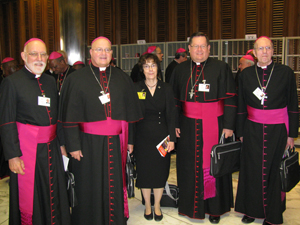
Joining the Holy Father for the October 11 celebration in
 (CCCB –
The Synod will meet until October 28, 2012. It brings together Bishops from around the world, as well as experts and auditors. Among the experts is one Canadian woman religious Sister Gill Goulding, C.J., Associate Professor of Systematic Theology and Spirituality at
A summary of the interventions of the Canadian delegates will be made available on the CCCB Website after they have been given at the Synod. This past June 19, the Most Reverend Nikola Eterovic and Msgr. Fortunato Frezza, C.S.S., respectively General Secretary and Under Secretary of the Secretariat of the Synod of Bishops, presented the “Instrumentum Laboris” or working document for what is the 13th Ordinary General Assembly of the Synod of Bishops.
 (CCCB –
In order to help parishes, Church media and diocesan communications services promote the Collection, the CCCB is making available an electronic version of the promotional kit on its website, www.cccb.ca. The electronic kit includes the following documents:
 In his letter to parishes, Archbishop Smith points out that “there are many meaningful events taking place this fall in the Catholic Church: the Synod of Bishops on the New Evangelization, the canonization of Blessed Kateri Tekakwitha, the 50th anniversary of the opening of the Second Vatican Council, as well as the launching of the Year of Faith by Pope Benedict XVI. In this context of joy and celebration, the Bishops of Canada are calling on the generosity of the faithful to ensure the success of the Collection for the Needs of the Church in
The Canadian Conference of Catholic Bishops is the national assembly of the Bishops of Canada. It was founded in 1943 and officially recognized by the Holy See in 1948. After the Second Vatican Council (1962–65), the CCCB became part of a worldwide network of Episcopal Conferences, established in 1965 as an integral part of the life of the universal Church.
 (CCCB –
Mr. Nolin holds a BA in theology from Saint Paul University, Ottawa; a teaching certificate from the University of Montreal; a licentiate and master’s degree in philosophy from the Sorbonne; a certificate in school administration from the Institut de pédagogie de l’enseignement catholique, Angers, France; and a diploma in adult education from the Université du Québec en Outaouais. He is completing a doctorate in practical theology with
The two Assistant General Secretaries and the Director of Administration work closely with the General Secretary in coordinating the work of the Conference. Because Assistant General Secretaries at times act on behalf of the General Secretary, their appointments need to be ratified by the Plenary Assembly. Mr. Nolin’s appointment will thus be on the agenda of the upcoming CCCB Plenary Assembly. The position is for a three-year term, renewable.
The Canadian Conference of Catholic Bishops (CCCB) is the national assembly of the Bishops of Canada. It was founded in 1943 and officially recognized by the Holy See in 1948. After the Second Vatican Council (1962–65), the CCCB became part of a worldwide network of Episcopal Conferences, established in 1965 as an integral part of the life of the universal Church.
 (CCCB –
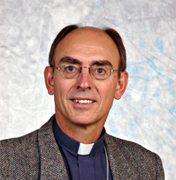
Archbishop Lavoie was born on April 22,
As mentioned above, Father William Stang, O.M.I., who, until now, has served as Vicar General of the Archdiocese of Keewatin – Le Pas, has been appointed Apostolic Administrator of the Archdiocese. There are approximately 37,000 Catholics in the Archdiocese which includes 45 parishes and missions, with 15 diocesan and religious priests and seven women who are members of religious institutes.
 (CCCB –
Bishop-Elect Gregory Bittman was born on March 5,
The Archdiocese of Edmonton has 126 parishes and missions, with a Catholic population of 378,545, served by 94 diocesan priests, 84 priests who are members of religious institutes, 20 permanent deacons, 271 religious Sisters and Brothers, and 42 lay pastoral workers.
 (CCCB –
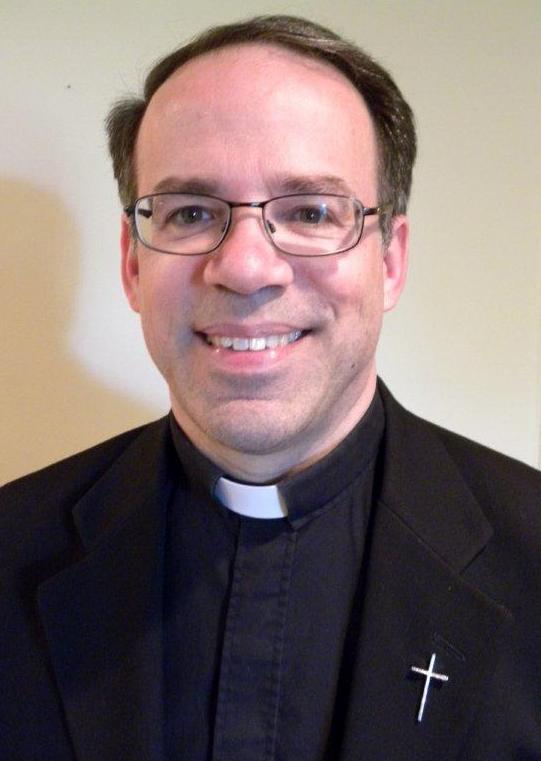
Born on March 19, 1963, in
For a number of years, Bishop-elect Damphousse taught at the Manitoba Catholic School of Evangelization, and was vocations director for more than 12 years. Before being appointed Rector of the Cathedral, he was chaplain at St. Boniface Diocesan High School for five years. Currently, he is a member of the Diocesan Finance Committee and of the Diocesan Commission for Liturgy. He has also been the spiritual director of the TEC (To Encounter Christ) movement for the past eight years.
The Diocese of Alexandria-Cornwall has 29 parishes and missions, with a Catholic population of 55,570, which is served by 29 diocesan priests, one priest who is member of a religious community, 25 Religious Sisters and Brothers, and 19 permanent deacons.
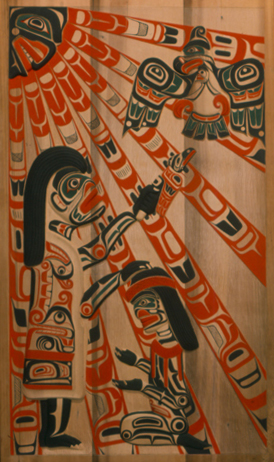 (CCCB – Ottawa)… The Canadian Catholic Aboriginal Council of the Canadian Conference of Catholic Bishops (CCCB) will meet in Saskatoon, 19-20 June 2012, immediately preceding the national event there by the Truth and Reconciliation Commission, 21 to 24 June. The members of the Aboriginal Council specifically chose to hold their semi-annual meeting in Saskatoon to demonstrate their solidarity with the Truth and Reconciliation Commission (TRC). On the evening of 22 June, the Aboriginal Council will make a public declaration on the work of the TRC, as well as present TRC Chair Justice Murray Sinclair a framed print from the CCCB art collection.
The art piece is entitled “The Baptism of Christ by John the Baptist”. The artist, Tony Hunt, is from the Aboriginal community of Kwakiutl, Victoria, B.C. The original painting is on a cedar panel from Virginia. Commenting on his work, the artist has stated: “Although our cultures differ, within both traditions there appears a Creator and ‘historic’ figures who have dedicated themselves to the spiritual and secular well-being of mankind. I sincerely hope that through this very important project a greater understanding of native culture will result in a spiritual harmony for all peoples of this world.” The CCCB art collection dates back to 1975 when the Bishops of Canada commissioned 20 artists from across the country to create works which would convey the Christian message and also serve to illustrate one of its publications at the time, the Sunday Mass Book.
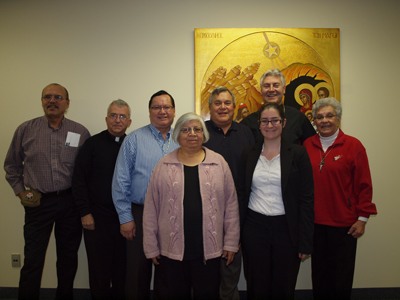 The Canadian Catholic Aboriginal Council is made up of seven indigenous representatives from different regions of Canada, some of whom had attended the former residential schools, in addition to two Catholic Bishops. The Bishops currently on the Aboriginal Council are the Most Reverend Claude Champagne, O.M.I., Bishop of Edmundston, and the Most Reverend Murray Chatlain, Bishop of Mackenzie-Fort Smith. The Council was established in 1998 by the CCCB to advise and assist it on issues relating to indigenous peoples in Canada, and to support and encourage efforts by the CCCB and individual Bishops toward reconciliation between the Catholic Church and indigenous communities.
The Truth and Reconciliation Commission was formally established on June 1, 2008, following the Indian Residential Schools Settlement Agreement. It has a five-year mandate “to contribute to truth, healing and reconciliation”.
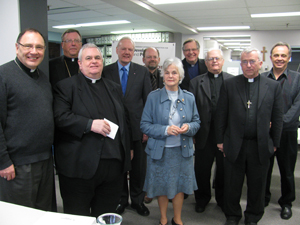 The CCCB Standing Committee on the Canadian Catholic Organization for Development and Peace (CCODP) met with the Liaison Committee of the CCODP National Council on May 31, 2012, at the offices of the Canadian Conference of Catholic Bishops (CCCB) in
Each of the joint meetings was preceded by separate meetings of the Liaison Committee and of the Standing Committee. Following their separate discussions, the two committees met together. Both the 31 May and 1 February joint meetings considered a practical process to follow-up on an earlier CCODP invitation that the CCCB offer suggestions on various draft documents being prepared by Development and Peace.
The May and February meetings also discussed a CCODP initiative to develop a “3D approach to partnership,” based on Dialogue, Discernment and Decision. Dialogue would include conversations by Development and Peace with its actual or proposed partners. Discernment includes the ways by which CCODP liaises and dialogues with its partners and with the Bishops of Canada as well as with local Bishops in the Global South. Decisions remain the responsibility of Development and Peace as part of its overall accountability. There was agreement at both the February and May meetings to continue work on the 3-D process as a constructive way to ensure objectivity, transparency, and input from all parties involved.
The members of the CCODP Liaison Committee are Mr. Ronald Breau,
The members of the CCCB Standing Committee are the Most Reverend John Boissonneau (Chairman), Auxiliary Bishop of Toronto; Pierre-André Fournier, Archbishop of Rimousk; André Gaumond, Archbishop emeritus of Sherbrooke; Fred Henry, Bishop of Calgary, together with CCCB General Secretary Msgr.